← Back to bills
H.R. 9994119th CongressReferred to the House Committee on Ways and Means.
Family Poverty is Not Child Neglect Act
Introduced: Jul 30, 2026
Latest action: Jul 30, 2026
Latest Action
Referred to the House Committee on Ways and Means.
1
Primary Sponsors
0
Cosponsors
2
Recorded Actions
0
Linked Votes
Plain-English AI Summary
What this bill means
Generated from the official bill text to make the legislation easier to understand.
What this bill does
The Family Poverty is Not Child Neglect Act amends Title IV, Part B of the Social Security Act to address how child welfare systems treat families experiencing poverty. The bill requires states to update their child welfare plans to prevent children from being removed from their homes strictly because their families are poor. It also requires the Department of Health and Human Services (HHS) to study the relationship between poverty and child welfare actions and report its findings to Congress.
Who it affects
* **Families experiencing poverty:** Low-income parents and guardians, particularly those facing unemployment or housing instability.
* **State child welfare agencies:** Agencies responsible for administering state child welfare plans and support services.
* **Federal officials and lawmakers:** The Secretary of HHS, the House Committee on Ways and Means, and the Senate Committee on Finance.
What would change
* **Prohibition on separation due to poverty:** State child welfare plans must officially assure that no child will be separated from a parent or guardian solely because the family is living in poverty.
* **Required support services:** State child welfare plans must include assurances that the state will create or improve benefits and services to help poor families stay safely together. This includes assistance targeting parental unemployment and housing insecurity.
* **Federal reporting deadline:** Within two years of the bill's enactment, the Secretary of HHS must submit a comprehensive study to the House Committee on Ways and Means and the Senate Committee on Finance.
* **Scope of the HHS study:** The report must analyze how poverty affects child welfare interactions, including agency contacts, neglect or abuse allegations and investigations, temporary or permanent child removals, and placements in foster care, kinship care, or informal care.
* **Legislative recommendations:** The HHS report must provide specific legislative recommendations on how to accurately gather data on poverty's role in child welfare cases and how to prevent family separations caused by poverty.
Money or funding
The provided summary does not mention any specific funding allocations, spending amounts, appropriations, taxes, or fees associated with implementing these requirements.
Important exceptions or limits
* The bill specifically addresses child removals that occur *solely* due to poverty; the summary does not detail how state agencies must handle cases where poverty coincides with other forms of risk or harm.
* The summary does not specify explicit penalties or enforcement mechanisms if a state fails to meet these plan assurances.
Plain-English bottom line
This bill requires states to promise that
they will not take children away from parents simply because the family is poor, mandating instead that states provide supportive services for housing and employment. It also requires a federal report within two years to recommend future laws for keeping low-income families together.
This summary was generated by AI from the official bill text. It is intended to make legislation easier to understand and does not replace the original legal language.
Official Summary
Official legislative summary associated with this bill.
No official summary is currently available.
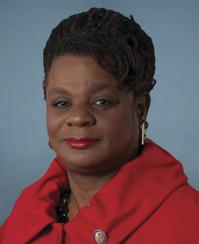
Primary Sponsors
Members listed as primary sponsors of this legislation.
Cosponsors
Members who joined this legislation as cosponsors.
No cosponsors found.
Recorded Actions
Official legislative actions recorded for this measure.
Linked Votes
Roll-call votes associated with this legislation.
No roll-call votes are currently linked to this bill.
Discussion notificationsSign in to subscribe
No comments yet. Start the conversation.