← Back to bills
S. 5273119th CongressRead twice and referred to the Committee on Commerce, Science, and Transportation.
Fisheries Science Modernization Act of 2026
Introduced: Aug 6, 2026
Latest action: Aug 6, 2026
Latest Action
Read twice and referred to the Committee on Commerce, Science, and Transportation.
1
Primary Sponsors
3
Cosponsors
2
Recorded Actions
0
Linked Votes
Plain-English AI Summary
What this bill means
Generated from the official bill text to make the legislation easier to understand.
What this bill does
The Fisheries Science Modernization Act of 2026 amends federal fishery laws to incorporate environmental DNA (eDNA)—genetic material found in water, air, or sediment—into federal fisheries research, monitoring, and stock assessments.
The bill directs the National Oceanic and Atmospheric Administration (NOAA) to run pilot projects, create an implementation plan, build internal capacity, and work with a new multi-agency coordination network to standardize and expand eDNA collection across marine and fresh waters.
Who it affects
* **Federal Agencies:** NOAA (specifically the National Marine Fisheries Service), the Office of Science and Technology Policy (OSTP), and participating network agencies (USGS, EPA, USFWS, NSF, USDA, Forest Service, Navy, Bureau of Indian Affairs, Smithsonian Institution, BOEM, NIH, NASA, CEQ, and NIST).
* **Fisheries Industry & Partners:** Commercial fishermen, Regional Fishery Management Councils, state coastal/fishery agencies, and Indian Tribes.
* **Research & Private Sector:** Academic institutions, Sea Grant fellows, private-sector eDNA testing laboratories, bioinformatics firms, and equipment manufacturers.
What would change
### Requirements (What agencies must do)
* **Amend Fishery Law:** The Secretary of Commerce must incorporate eDNA and genetic methods into fisheries research, surveys, stock assessments, and ecosystem monitoring based on the best available science.
* **Pilot Study:** NOAA must conduct a multi-year pilot study across at least three federally managed fisheries representing different regions. The study must compare eDNA to traditional methods (such as trawls or acoustic surveys), test automated or AI-enabled samplers, consult with industry and Tribal partners, and submit annual progress reports to Congress.
* **Implementation Plan:** Within two years of starting the pilot study, NOAA must submit a plan to Congress to systematically integrate validated eDNA methods into assessments. The plan must prioritize fisheries based on economic/subsistence value and data needs, safeguard genetic data, and include cooperative research with commercial fishermen.
* **Workforce & Survey Integration:** NOAA must expand staff training for eDNA, build archival sample databases, and add routine eDNA sampling to existing fishery surveys.
* **National Coordination Network:** The bill establishes the National Aquatic Biomolecular Coordination Network, co-chaired by NOAA and OSTP. The network must establish national standards for sampling and lab workflows, set up pilot testing sites, ensure data compatibility while respecting Tribal data sovereignty, hold annual interagency meetings, and submit annual performance reports to OSTP.
### Permissions (What agencies are authorized to do)
* **NOAA is permitted to:**
* Fund university training programs and Sea Grant fellowships in molecular ecology and genetic data analysis.
* Partner with private biotech firms and expand its internal laboratory capacity.
* Contract with accredited private-sector labs and service providers for eDNA sample processing and sequencing when cost-effective.
* Publish performance standards to guide federal purchases of commercial eDNA tools.
Money or funding
* **Pilot Study Funding:** The bill authorizes "such sums as may be necessary" to carry out the multi-year eDNA pilot study.
* **Grants & Contracts:** NOAA is authorized to spend funds on academic fellowships, workforce training, internal lab upgrades, and external contracts with private eDNA labs.
* No specific dollar amounts, tax changes, or fee structures are included in the summary.
Important exceptions or limits
* **Exemption from Protected Species Penalties:** Collecting air, water, or sediment samples *exclusively* for eDNA analysis is legally exempt from being classified as an illegal "taking" of protected species under the Endangered Species Act or the Marine Mammal Protection Act.
* **Survey Integration Limit:** NOAA is required to integrate eDNA collection into existing fishery surveys only if doing so improves data quality or lowers costs without disrupting core operations.
* **Data Sovereignty Limit:** Open-access data sharing required under the national network must explicitly respect Tribal data sovereignty.
Plain-English bottom line
This bill requires NOAA and other federal agencies to modernize marine science by incorporating water and air genetic testing (eDNA) into fish population counts. It sets up testing programs, protects scientists from species-disruption penalties when gathering water samples, creates uniform national standards for genetic data, and allows NOAA to partner with or hire private labs to process samples.
This summary was generated by AI from the official bill text. It is intended to make legislation easier to understand and does not replace the original legal language.
Official Summary
Official legislative summary associated with this bill.
No official summary is currently available.
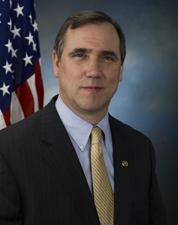
Primary Sponsors
Members listed as primary sponsors of this legislation.

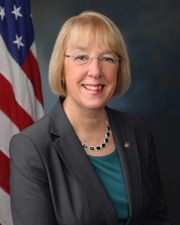
Cosponsors
Members who joined this legislation as cosponsors.

Recorded Actions
Official legislative actions recorded for this measure.
Aug 6, 2026
Read twice and referred to the Committee on Commerce, Science, and Transportation.
Official source ↗Linked Votes
Roll-call votes associated with this legislation.
No roll-call votes are currently linked to this bill.
Discussion notificationsSign in to subscribe
No comments yet. Start the conversation.