← Back to bills
H.R. 10080119th CongressReferred to the House Committee on Energy and Commerce.
Energy Utility Lobbying Ban Act
Introduced: Aug 10, 2026
Latest action: Aug 10, 2026
Latest Action
Referred to the House Committee on Energy and Commerce.
1
Primary Sponsors
0
Cosponsors
2
Recorded Actions
0
Linked Votes
Plain-English AI Summary
What this bill means
Generated from the official bill text to make the legislation easier to understand.
What this bill does
This bill requires the U.S. Department of Energy (DOE) to reduce federal State Energy Program funding to any state that does not create and enforce specific lobbying restrictions on former state utility regulators and regulatory employees.
It aims to stop former state energy officials from advocating before their former regulatory agencies on behalf of electric utilities.
Who it affects
* **State Governments and Utility Regulators:** Must enact and enforce post-employment lobbying restrictions to avoid losing federal energy grants.
* **Former State Regulatory Officers and Employees:** Subject to restrictions on when and how they can interact with or lobby their former employer.
* **Electric Utilities:** Restricted from having former state regulatory personnel advocate on their behalf under specified circumstances.
* **U.S. Department of Energy (DOE):** Required to issue regulations, evaluate state laws annually, operate a tracking system, and manage an appeals process.
What would change
If enacted, states must implement the following legal protections—through state legislation, administrative rules, or binding regulatory orders—or face financial penalties:
* **Permanent Lobbying Ban:** Former regulatory officials and employees are permanently prohibited from appearing or advocating before their former agency on behalf of an electric utility regarding any matter in which they personally and substantially participated while employed by the state.
* **Two-Year Cooling-Off Period:** Former officials are prohibited for two years after leaving office from advocating before their former agency regarding any matter officially pending under their responsibility during their final year of state employment.
* **State Enforcement Mandate:** States must actively investigate complaints, impose penalties for noncompliance, and allow affected parties to seek civil damages in court.
* **Federal Oversight and Deadlines:**
* **Within 9 months of enactment:** The Secretary of Energy must issue official regulations to implement the law.
* **Within 1 year of enactment (and annually thereafter):** The Secretary must review state laws to determine compliance.
* **Ongoing:** The DOE must maintain a publicly accessible compliance database, issue guidance, offer technical support to states, establish an appeals process for contested decisions, and submit annual compliance reports to Congress.
Money or funding
* **10 Percent Funding Reduction:** Starting the first full fiscal year after enactment, the Secretary of Energy must withhold 10 percent of a state's State Energy Program financial assistance if the state fails to enact and enforce the required lobbying restrictions.
* **Grace Period:** Noncompliant states are given 90 days to correct their noncompliance before the 10 percent funding is withheld.
* **Restoration of Funds:** Withheld money is not permanently lost immediately; if a noncompliant state comes into compliance, the Secretary must release the withheld funds to the state in the following fiscal year.
Important exceptions or limits
* **Penalty Scope:** The financial penalty applies only to federal State Energy Program funding (under 42 U.S.C. 6323), not to all federal grants a state receives.
* **Flexibility in Implementation:** States are permitted to choose how they enact these bans (whether through legislation, agency rulemaking, or binding regulatory orders), provided the end result is legally binding and enforced.
* **Unclear Details:** The summary notes that states must establish penalties for noncompliance, but it does not specify exact minimum or maximum fine amounts for individual violators.
Plain-English bottom line
This bill uses federal funding as leverage to limit the "revolving door" between state utility regulators and electric companies. States that do not enforce a permanent ban on specific conflict-of-interest cases and a two-year cooling-off period for former energy regulators will lose 10 percent of their federal State Energy Program grants until they comply.
This summary was generated by AI from the official bill text. It is intended to make legislation easier to understand and does not replace the original legal language.
Official Summary
Official legislative summary associated with this bill.
No official summary is currently available.
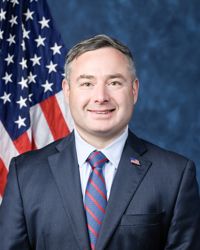
Primary Sponsors
Members listed as primary sponsors of this legislation.
Cosponsors
Members who joined this legislation as cosponsors.
No cosponsors found.
Recorded Actions
Official legislative actions recorded for this measure.
Linked Votes
Roll-call votes associated with this legislation.
No roll-call votes are currently linked to this bill.
Discussion notificationsSign in to subscribe
No comments yet. Start the conversation.