← Back to bills
H.R. 10081119th CongressReferred to the House Committee on Energy and Commerce.
No Utility Junk Fees Act
Introduced: Aug 10, 2026
Latest action: Aug 10, 2026
Latest Action
Referred to the House Committee on Energy and Commerce.
1
Primary Sponsors
0
Cosponsors
2
Recorded Actions
0
Linked Votes
Plain-English AI Summary
What this bill means
Generated from the official bill text to make the legislation easier to understand.
What this bill does
The No Utility Junk Fees Act (H.R. 10081) conditions federal funding for state energy programs on whether states ban electric utilities from charging residential customers certain payment processing fees, referred to in the bill as "spurious charges."
To keep full federal funding, states must adopt and enforce rules that prohibit these fees, require utilities to offer at least one fee-free payment method that does not require internet access, and require clear fee disclosures on customer bills.
Who it affects
* **Residential electricity consumers:** Individuals purchasing electricity for personal, family, or household use.
* **Regulated electric utilities:** Utilities serving residential customers that currently charge or plan to charge payment processing fees.
* **State governments and Public Utility Commissions:** State authorities responsible for passing statutes, administrative rules, or binding orders to enforce the bill’s requirements.
* **Department of Energy (Secretary of Energy):** The federal agency responsible for evaluating state compliance and withholding or restoring state grant funds.
What would change
* **Payment fee restrictions:** Regulated electric utilities would be prohibited from charging payment fees that exceed the greater of $3.00 or 150% of the utility's direct processing costs.
* **Zero-fee payment methods:** Utilities could not charge any payment fees on methods where the utility incurs no direct processing cost, such as payments made by mail, in-person at utility offices, recurring auto-pay, and direct automated clearing house (ACH) transfers.
* **Fee-free payment access:** Utilities must provide residential customers with at least one payment channel that carries no fees and is accessible without using the internet.
* **Billing disclosure rules:** Any allowed payment processing charges must be clearly itemized on customer bills, detailing the fee amount, the reason for the fee, the total amount due, and available fee-free payment options.
* **State enforcement:** States must create processes to investigate consumer complaints, assess penalties against non-compliant utilities, and allow consumers to recover unlawfully charged fees.
* **Federal funding penalties:** Starting in the first full fiscal year after enactment, the Department of Energy must withhold 10 percent of a state’s State Energy Program funding if the state fails to adopt and enforce these rules.
Money or funding
* **Federal funding impacts:** States risk losing 10 percent of their annual financial assistance under the Department of Energy’s State Energy Program if they do not comply.
* **Fund restoration:** If a state loses funds due to non-compliance, the Secretary of Energy must restore the withheld funds in the following fiscal year once the state comes into compliance.
* **Fee caps:** Payment processing fees charged to consumers are capped at whichever amount is higher: $3.00 or 150% of direct documented processing costs. Direct costs ("cost of acceptance") include processor fees, interchange fees, fraud prevention, and direct labor. Utilities
cannot include general overhead, profit margins, or non-processing operational costs in these fee calculations.
Important exceptions or limits
* **Commercial/Industrial exclusion:** The bill's protections apply only to residential electricity customers, not commercial or industrial power buyers.
* **Allowed fee overhead limits:** While utilities can pass along direct processing costs up to the designated cap, they are strictly prohibited from factoring general overhead or profit margins into payment processing fees.
* **Unclear details:** The provided summary notes a section for "State Submission & Review Deadlines," but cuts off before outlining specific dates, deadlines, or submission procedures for states.
Plain-English bottom line
This bill uses federal funding as leverage to force states to prohibit electric utilities from charging residential customers excessive or hidden payment processing fees, while guaranteeing customers access to at least one fee-free way to pay their bill without using the internet.
This summary was generated by AI from the official bill text. It is intended to make legislation easier to understand and does not replace the original legal language.
Official Summary
Official legislative summary associated with this bill.
No official summary is currently available.
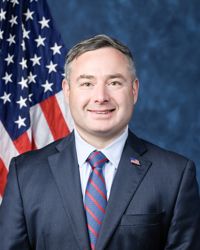
Primary Sponsors
Members listed as primary sponsors of this legislation.
Cosponsors
Members who joined this legislation as cosponsors.
No cosponsors found.
Recorded Actions
Official legislative actions recorded for this measure.
Linked Votes
Roll-call votes associated with this legislation.
No roll-call votes are currently linked to this bill.
Discussion notificationsSign in to subscribe
No comments yet. Start the conversation.