
← Back to bills
H.R. 10094119th CongressReferred to the House Committee on Energy and Commerce.
Affordable Pricing for Taxpayer-Funded Prescription Drugs Act of 2026
Introduced: Aug 13, 2026
Latest action: Aug 13, 2026
Latest Action
Referred to the House Committee on Energy and Commerce.
1
Primary Sponsors
1
Cosponsors
2
Recorded Actions
0
Linked Votes
Plain-English AI Summary
What this bill means
Generated from the official bill text to make the legislation easier to understand.
What this bill does
This bill requires products and services created using federal research funds to be offered in the United States at a "reasonable price." It ties the upper price limit in the U.S. to prices charged in other large, high-income nations.
It also authorizes the Department of Health and Human Services (HHS) to set additional price controls, establishes a public waiver process, and requires companies that commercialize these federally funded inventions to report detailed financial and sales data to the public.
Who it affects
* **Federal agencies:** Any agency that provides or receives funding for biomedical research through grants, contracts, or cooperative agreements.
* **Biomedical companies and researchers:** Entities that license, develop, or sell products created with federal research money.
* **The Secretary of Health and Human Services (HHS):** Responsible for setting baseline pricing rules, collecting reports, managing public waivers, and optionally creating further pricing regulations.
* **U.S. consumers and patients:** U.S. residents who purchase taxpayer-funded healthcare products or services.
What would change
**Mandatory Requirements:**
* **Funding Conditions:** Federal research funding agreements, patent licenses, and regulatory data licenses must include a rule requiring any resulting biomedical product or service to be sold at a reasonable price determined by HHS.
* **Price Caps:** U.S. prices for covered products cannot exceed a baseline price set by the median price charged in Canada plus six other large, high-income member countries of the Organisation for Economic Co-operation and Development (OECD).
* **Financial Transparency:** Companies selling covered products must report data to HHS on:
* The costs of each clinical trial needed for regulatory approval;
* Federal subsidies received for those trial costs; and
* Annual sales revenues broken down by country.
* **Public Access:** HHS must make all submitted company transparency reports available to the public.
* **Existing Laws:** These rules add to existing federal contract pricing caps and patent rules (like the Bayh-Dole Act) rather than replacing them.
**Authorizations and Permissions:**
* **Modifying Price Formulas:** The Secretary of HHS is permitted (after public notice and comment) to adjust the pricing formula to prevent U.S. residents from paying more than residents of other large, wealthy nations.
* **Optional Price Regulations:** HHS is permitted, but not strictly required, to issue rules that reduce prices or shorten market exclusivity periods if:
* Company revenues exceed target levels;
* Prices exceed standard measures of health benefit per cost; or
* Prices create severe patient access barriers or financial hardship.
Money or funding
* **Direct Funding:** The bill summary does not specify explicit federal funding amounts or tax changes to implement these rules.
* **Subsidies and Revenue Data:** Companies must disclose all federal subsidy dollars received for clinical trials and provide annual worldwide sales revenue figures.
* **Pricing Limits:** The bill directly restricts how much money companies can charge U.S. buyers for covered products by capping U.S. prices to an international standard.
Important exceptions or limits
* **Waivers:** HHS can waive all or part of the price requirements if the Secretary determines a waiver is in the public interest.
* **Waiver Process Limits:** Before a waiver takes effect, HHS must issue a public notice, hold a public hearing, accept public written comments, and publish an economic justification.
* **Applicability:** The pricing limits apply specifically to "biomedical products or services" developed with federal research money—including drugs, vaccines, medical devices, diagnostic tests, assistive technologies, and cell or gene therapies—rather than all medical products on the market.
Plain-English bottom line
If a drug, medical device, or health technology is created using federal research funds, this bill prevents companies from charging U.S. consumers more than the median price paid in Canada and six other major developed nations. It gives HHS the power to grant public waivers or impose extra price limits, while requiring manufacturers to publicly reveal their clinical trial costs, federal subsidies, and sales revenue.
This summary was generated by AI from the official bill text. It is intended to make legislation easier to understand and does not replace the original legal language.
Official Summary
Official legislative summary associated with this bill.
No official summary is currently available.
Primary Sponsors
Members listed as primary sponsors of this legislation.
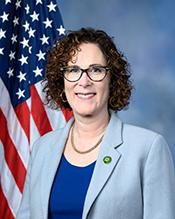
Cosponsors
Members who joined this legislation as cosponsors.

Recorded Actions
Official legislative actions recorded for this measure.
Linked Votes
Roll-call votes associated with this legislation.
No roll-call votes are currently linked to this bill.
Discussion notificationsSign in to subscribe
No comments yet. Start the conversation.