← Back to bills
H.R. 10097119th CongressReferred to the House Committee on Education and Workforce.
To establish a matched savings program for low-income students.
Introduced: Aug 13, 2026
Latest action: Aug 13, 2026
Latest Action
Referred to the House Committee on Education and Workforce.
1
Primary Sponsors
1
Cosponsors
2
Recorded Actions
0
Linked Votes
Plain-English AI Summary
What this bill means
Generated from the official bill text to make the legislation easier to understand.
What this bill does
The Earn to Learn Act requires the U.S. Secretary of Education to create a competitive grant program within nine months of the bill's enactment. This program enables state governments and nonprofit organizations to operate matched savings programs for low-income postsecondary students.
To support grant recipients, the Secretary of Education is required to develop and provide standardized tools, including:
* A Financial Capability Training Platform
* A Success Coaching Model
* A Program Guide
* A online Reporting Dashboard that complies with the Family Educational Rights and Privacy Act (FERPA)
Who it affects
* **Low-income postsecondary students and their families**, who can participate in matched savings programs.
* **State governments and nonprofit organizations**, which are eligible to apply for competitive grants to run these programs.
* **The U.S. Department of Education**, which is required to establish the grant program and build standardized program tools.
What would change
* **Grants for Savings Programs:** State governments and nonprofits may apply for federal grants to manage matched savings accounts for qualifying students.
* **Matching Rules:** Grant recipients are required to match student or family savings. Once a student or family deposits an initial $100 into a postsecondary match savings account (such as a 529 account or custodial account) for an academic year, the grant recipient must provide $8 in matching funds for every additional $1 deposited.
* **Implementation Support:** Grant recipients will use federal tools provided by the Secretary of Education to deliver financial training, coaching, and standardized reporting.
Money or funding
* **Matching Ratio:** Students receive an 8-to-1 match ($8 provided by the grant recipient for every $1 deposited by the student or family) after an initial $100 deposit per academic year.
* **Account Types:** Funds are held in custodial accounts or 529 postsecondary savings accounts.
* **Federal Spending:** The provided summary does not detail the total amount of federal funding allocated for the grant program.
Important exceptions or limits
* The 8-to-1 funding match applies only after an initial $100 deposit is made for the academic year.
* Grants are limited to state governments and nonprofit entities; individuals cannot apply directly to the U.S. Department of Education for a grant.
* **Unclear details:** The provided summary is incomplete regarding the exact rules for student contributions if a student loses program eligibility or if the program expires.
Plain-English bottom line
This bill requires the U.S. Department of Education to set up a grant program within nine months to help states and nonprofits offer matched savings accounts for low-income college students, matching student deposits at an $8-to-$1 rate after an initial $100 deposit per academic year.
This summary was generated by AI from the official bill text. It is intended to make legislation easier to understand and does not replace the original legal language.
Official Summary
Official legislative summary associated with this bill.
No official summary is currently available.
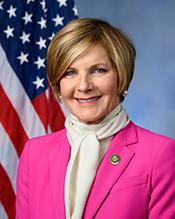
Primary Sponsors
Members listed as primary sponsors of this legislation.
Cosponsors
Members who joined this legislation as cosponsors.

Recorded Actions
Official legislative actions recorded for this measure.
Linked Votes
Roll-call votes associated with this legislation.
No roll-call votes are currently linked to this bill.
Discussion notificationsSign in to subscribe
No comments yet. Start the conversation.